Showing posts with label CD Review. Show all posts

Wednesday, August 29, 2007

Life in a Cube

Office work is interesting. Here are some things I have learned about office jobs.
  • There are no people that act like characters on The Office. Do not expect a Dwight Schrute, a Michael Scott, or even a Jim-and-Pam. Sure, there are funny people, but they are all funny in the conventional "e-mail forward" sense of funny.

  • There are people that look like characters on The Office. I have a Stanley and a Phyllis in my office. Which ones do you have? Collect them all!

  • To quote my man Morrissey, "Here everybody's friendly, but nobody's friends." In the office building, it is a prerequisite to say hello to everybody every time you pass them in the hallway. If you just saw them five minutes ago but you went a'roaming, you must say hello when you pass them again. Are you at the urinal next to somebody? Salutations--just don't shake hands. Do you know their names? Will you ever? The correct answer is "No, but hello to you, friend!"

  • Your cubicle is an extension of you. Are you a fan of the "basketballs?" It is your solemn duty to let everybody know by tacking pin-ups to your walls of the Philadelphia One Thousand Seven Hundred Seventy Sixers. My only decoration is a Dwight Schrute bobblehead, which conveys to my coworkers that I am boring.

  • If you are bored--and you will be because you work in an office--you have to make your own fun. Sure, you could ceaselessly refresh all your websites on Google Reader (p.s. helpful office tip number 34: familiarize yourself with RSS feeds for maximum economy in slacking), but you'll become a lonesome soul. Spice things up. One fun thing to do is have Post-It Battles with coworkers--silly messages, games of "Twenty-Questions," and what-have-you. It doesn't matter what you do. The important thing is that you waste paper, and spend a couple minutes of your time doing it.
So that's work. Oh, and I also do work at work. I am the only male secretary in the entire building. And you can take that one to the sperm bank.

On non-office-related thoughts: did you know that all people are people? I was unaware of this fact until just recently. You see, authority figures have never been people before. They have been faceless automaton robots that want to suck out my brain with their magical powers.

But within the last year, I got to know a number of people personally that I'd never come across before. Security guards; doctors; teachers; police officers. I've had conversations with all of these people, and it turns out that they have families and ambitions and insecurities and rent/mortgage payments just like everyone else. Especially the "insecurities" part.

So do yourself and the world a favor--treat everybody like a human being. Chances are that they hate their job as much as you hate your own.

The following people are still not people (until they come to me personally and prove otherwise): supermodels, famous actors, beautiful women of any sort.

And now, to catch up in the previous month of no-posting: some Six-Word Reviews of Various Things!

Film
  • Harry Potter and the Order of the Phoenix: Changed from book for the better.
  • The Bourne Ultimatum: As great as the first sequel.
Television
  • Big Brother: Absolute trash three times a week.
  • The X-Files Season 1: Got in a groove, kicked ass.
  • The X-Files Season 2: Virtually flawless.
Music
  • Violent Femmes: Live in Iceland: Short, but agressive and well-played set.
  • Violent Femmes: BBC Live: Brilliant set from band's golden years.
  • Violent Femmes: Live in Chicago: Noteworthy for songs from Freak Magnet.
  • Zappa Plays Zappa (concert): Tight improv band, did Frank proud.

Thursday, August 02, 2007

Life, Love, and Green Peaness

I'm trying to work my way into the mindset that I'm actually an adult now. I mean, I've been an adult for almost five years, but it's starting to feel official.

Two of my best friends are engaged and very pregnant. I started a full-time job with benefits and regular hours. I did something outside of work with a guy in his forties and his family. I am old and vaguely depressed. Where did my childhood go? Wasn't I supposed to be seriously dating somebody on the way to marriage now? Is this how it's going to be until I turn sixty-five and retire?

Onward and upward.

I saw The Simpsons Movie yesterday. Not an awful lot to say about it. If you like The Simpsons, you'll like the movie adaptation just as much. It's not as revolutionary as the South Park movie, but it keeps the legacy of the show intact and unspoiled. My biggest complaint would be the lack of screen time devoted to the secondary characters of Springfield (who, let's face it, are the heart and soul of the entire show). On television, characters like Apu and Moe overcome their stereotypical animation to become living, breathing characters that we care about. On the big screen, they are there merely for a few one-liners.

When it comes to music, I've been indulging in some summer movie scores. First: the score to Fantastic 4: Rise of the Silver Surfer by John Ottman. I've been impressed by Ottman's superhero scores in the past (X2: X-Men United and Superman Returns), and I heard the end credits suite for this movie and fell in love with what turns out to be the Silver Surfer's theme. I'm disappointed to say that there is little else on the album that is remotely inspired or inspiring. The disc is full of dreary, dissonant underscore and--worse yet--repetition of the central themes that becomes first monotonous and then annoying. If I had to guess, I'd say that Ottman gave the best possible film score to a movie as bad as Fantastic 4, and failed just as miserably as the cast and crew.

Another franchise falls further into the toilet with Nicholas Hooper's score to Harry Potter and the Order of the Phoenix. After Patrick Doyle's bland effort in Goblet of Fire, I was happy to see a changing of the guard. However, Hooper's music seems entirely out of place in every way. Where the film is the "darkest yet" in the series, the score is jaunty and light-hearted. Where the film is steeped in fantasy and teenage angst, we are given music straight out of a 1960s western. It's a listenable score, and enjoyable, but belongs elsewhere. I really wanted to consider the music for this series classic when it began in 2001, but the only score to come remotely close was John Williams' Prisoner of Azkaban work.

Michael Giacchino continues to earn his place as the "next big thing" in film scoring with Ratatouille. The score fits the film perfectly, and--more importantly for the sake of this review--makes a damn good listening experience on CD. The writing is smooth and jazzy, formulaic at times but never in a hackneyed way. In a world overrun by the synth-enhanced bombast of Hans Zimmer's action scores, it's nice to hear a listenable album performed entirely by live musical combos.

Don't get me wrong--I like Hans Zimmer. In fact, his score to The Simpsons Movie is beyond groovy. Free of the orchestral thwomp-trap made popular by his scores to the Pirates of the Caribbean movies, Zimmer writes in a light comedic style that best displays his talent with melody. He writes with a manic energy that suggests some of Danny Elfman's comedic work from the 1990s, and twists Elfman's famous Simpsons theme song into his own themes. It's a shame that the score was mixed so low in the actual movie.

Gaming...I am apparently becoming a gamer, despite the fact that I couldn't actually care less about gaming. My idea of an enjoyable board game experience is Trivial Pursuit or Scattergories--party games that test your knowledge more than your ability to strategize. Still, when all of your friends and coworkers are Eurogamers, you have to play just to stay social.

Ticket to Ride is a game about building train tracks across America. This game is among my favorites of the Eurogames I've played, but I can't tell if that's because it's good or because I actually won it.

Condottiere is a card game that is pretty entertaining too. Uh...no review.

I've been playing Dungeons and Dragons with some friends, which, once again, isn't really my thing. Still, it's a good way to stay friends with your friends I guess. I am a wizard named Thigpen. I have a pet bat named Thaddeus and a horse with no name.

This is where the blog post fizzles out.

Monday, July 09, 2007

G'out of here

Been to the doctors' over the past few days giving blood and getting x-rays and trying to find out what's wrong with my horribly swollen foot.

Is it gout?

Is it fractured?

Do you have any idea?


Shit. Thankfully these meds are making the swelling go away, and also doping me up something fierce.

The new Ryan Adams CD, Easy Tiger, is really good. If you're a fan of Ryan Adams, you know what you're getting in this package--country-influenced rock that is often hit-or-miss. Thankfully, Tiger follows the almost-all-hits 2005 triple punch of Cold Roses/Jacksonville City Nights/29, and this seems to be similarly even. I'd rate this album as probably my second favorite of Adams' solo-oeuvre, right behind his debut album, Heartbreaker. I find that I don't have an awful lot to say about the disc, but if you aren't moved by the album's standout song, "The Sun Also Sets" (or by the rocker "Halloweenhead"), you're a heartless beast.

The other night I watched a movie called Reincarnation. Well, actually, it's a Japanese movie called Rinne, but it's translated into "Reincarnation," and I'm an American capitalist pig that doesn't think everything is better in its original language. Rinne is about a young actress who is cast in a film about a real-life murder spree. She begins seeing the murders take place, and in turn begins to suspect that she is one of the victims reincarnate.

The film was directed by Takashi Shimizu, who directed the original Japanese films upon which The Grudge films were based. Since I started working at a movie theater almost seven years ago, I haven't seen an awful lot of movies like that. Turns out that the main audience of such films--intended or not--is giggling twelve-year-old girls, which greatly decreases from my enjoyment of such things. I now regret never having seen any of those movies.

This film is really creepy. I hate movies that generally think "jumping" is the same as "being scared." This movie has a few of those moments, but it's more unsettling, allowing the situation and the atmosphere to give you actual heebies and genuine jeebies. Without ruining the film, the end has several possible meanings, and it will leave you thinking about it for an hour or two after you're done watching--which may be the highest accomplishment a movie can attain. I love fighting robots as much as the next red-blooded American, but I can't imagine many people came out of Transformers pondering its deeper meaning.

Rinne was originally released in America as part of the "After Dark Horror Fest," also called '8 Films To Die For." If the films are all of this quality, I'll probably try to catch some more on DVD.

Thursday, July 05, 2007

The Lost Highway (now with less Werewolves)

I had a job interview a few weeks ago, and today I got the call that says I'm gainfully employed. This means a number of things.

  • Regular hours. No more working until 1:30am. No more working for eleven hours straight. No more worked weekends or holidays (at least not while I work for the Commonwealth of Pennsylvania).
  • Putting in my two-weeks notice at my job of six-and-a-half years. This may have been the hardest thing I had to do in a long time. I went through like six drafts of it. I got teary-eyed on the drive home.
  • Money money 2020.
  • Benefits.
The soundtrack to my day today was the new Bon Jovi CD, Lost Highway. I had heard a lot of reviews calling it a more "country-tinged" Bo-Jo album, but I didn't get that at all. What I heard was another par-for-the-course album, as formulaic as each release since These Days (Crush, Bounce, Have A Nice Day). Sure, there's some electronic fiddle in there, but it's more reminiscent of John Mellencamp than any actual country star.

So is it worth buying? Well, you're either a Bon Jovi fan or you aren't. We Bon Jovi fans like to be beaten over the head with our lyrics and our guitar riffs. If you fall into that category, this is about on-par with the previous three releases from the band, and you'll enjoy it. If you're not a lover of the B-J, pass on it. There's nothing revolutionary here that will change your mind.

If you're a country fan, this probably isn't the album for you. There are cameos by Big & Rich and Leann Rimes, but the first is unrecognizable underneath the song's electronics (yes, there is use of the vox-box in these songs), and the second could very well be any paid studio-singer.

I like it though.

Monday, June 25, 2007

1408 Big Sixties Hits!

I watched John Waters' Hairspray with my family on Saturday night, and it was a quality flick. Just the right mix of styles--some broad, physical comedy (see the pimple-popping scene or Waters' own cameo as a bizarre psychologist), quirky oddity (the best friend's reaction to seeing her pal on the television for the first time), and social commentary (the entire race plot).

Waters looks beyond the sociocultural "norms," incorporating a drag queen, interracial relationships, the obese (one of whom gets the cute guy), and should be commended for it. You can have all your Snakes on a Planes and Grindhouses, but they're kitschy for the sake of kitsch. Waters has camp down to an artform, and he manages to make salient points throughout his film while still managing to be bizarrely entertaining.

I may have been the only one in the room to enjoy it.

On the video game front, I've still been using my Playstation 2. I popped in the movie tie-ins, Lord of the Rings: The Two Towers and Lord of the Rings: Return of the King. These games are particularly well-made and replayable--especially for movie tie-ins, which are usually made on the cheap. EA Games has gone all out to make your time an enjoyable experience.

In Two Towers, you battle your way through classic scenes from the first two LOTR pictures, playing as Aragorn, Legolas, or Gimli. In Return of the King, your entourage expands to include Gandalf and the four Hobbits as you fight your way through a mishmash of scenes that could have happened in the latter two films.

The games function very much like Gauntlet if you've ever played that. Hack-and-slash tactics will net you experience points so that you can buy upgrades. The trade-off is that you lose Gauntlet's trademark goofy style (think transformation into a chicken, or a bombstic announcer) and gain familiar situations and voices from the popular film trilogy. The games are difficult. This is partially by design, and that's a good thing. It gives you reason to replay the game in order to build up enough upgrades to defeat further levels.

However, both games suffer from some unintentional difficulty, dealing mainly with glitchy graphics and bad camera angles. This is especially true of Return of the King, which leads me to believe that it was built not for gameplay, but to trump on the Two Towers game's (unexpected?) critical and financial success.

When you defeat the second game in the series, and advertisement appears for a Lord of the Rings Trilogy game, presumably in the same style. Unfortunately, this never came to pass. With enough invested time into the gameplay mechanics and engine, that could have been a fantastic game.

I can say just about the opposite for Resident Evil: Code Veronica X. I picked this up on the cheap years ago and didn't pop it into the PS2 until this past weekend. I couldn't make it past the first zombie without turning the system off in frustration (and even then, I tried for an hour...damn my stubbornness).

The controls are awful. Do you remember Star Wars: Shadows of the Empire for the Nintendo 64? A fairly good early 3D console shooter, no? Do you remember the entirely useless "Cinematic" camera angle option, which made controlling things nearly impossible? No? That is because nobody in their right mind used the fucking thing. This is what the controls are like for Code Veronica X. Unresponsive, unintuitive, and just plain annoying. Compound onto that should-be-simple movement component all of the other tasks required of you (i.e. fighting, aiming, etc.), and it's Bungtown--population you. I was disappointed, because I had heard so many good things about the Resident Evil franchise. I have a friend who is going to lend me some other games in the run, and hopefully that will restore my faith in the gaming public.

I've had Tenacious D's The Pick of Destiny in my car stereo this week. I never did get a chance to see the movie, and I'm not sure whether that's a good thing or a bad thing. On one hand, I'm completely lost as to the plot of the movie. Judging by the soundtrack, it's a coming-of-age story about a young man brought up in a Christian household, who must undergo a battle with Satan through "rock-off challenge." There's also apparently car chases, Sasquatch, and a magical guitar pick.

On the other hand, having not seen the movie has its perks. I'm left with brilliant non sequiturs which make little-to-no sense. Stuff about Ronnie James Dio and "deactivating lasers with [one's] dick." The stuff probably loses humor with context (and I'm not sure I want to see Jack Black's privates in action anyway). Still, lyrics or no, Tenacious D shows the same masterful use of rock instrumentation, melody, and harmony that made their initial offering a success. A definite recommendation.

Today I helped a friend move out of her place and then we caught a matinee of 1408. I thought it was an outstanding movie, until it ended and I realized that I didn't get it at all. And not in a makes-you-think, David-Lynch kind of way. Just in an extremely confusing (mind-bottling) kind of way.

As I said, my first impression was that it was great. My mind was racing the whole time. The performance was outstanding--and I say "performance" singular because this is John Cusack's movie--nobody else gets more than ten minutes. Samuel L. Jackson is given equal billing on the posters, but he turns in nothing but a glorified (albeit well-acted) cameo. It was genuinely a scary picture, and I can't say that I've been scared in a theater in a long time--probably since The Ring.

It's a shame then that it had to fizzle out. We're left with an ending that does nothing for the character, and which includes a twist on another key character which makes absolutely no sense whatsoever. In fact, I would have liked this movie five times more if they had excised that particular twenty-second scene.

And now, for your reading pleasure: 1408 endings that would have been better than the ending to 1408.

1) John Cusack is rescued from room 1408 by a magical, winged Elvis impersonator.
2 through 1408) Etc.

Saturday, June 16, 2007

More Amerigames and some strange weirdos

Let's see here. A little catch-up.

On Thursday after my job interview, I played a few very American Amerigames with my buddies Brad, Jeremy, and Chris.

Game number one: Trump: The Game (Milton Bradley) starring Donald Trump as Donald Trump in a quest to Trump the other player's Trump before Trumptime runs out. Seriously, everything in this game is branded with The Donald's traditional "T." The game pieces. The money (Trump Bucks, signed by Donald Trummmmmp--maybe the extra M's stand for "money"), the die, the board. Everything. T. T. T.

The gameplay itself is fairly fun, actually--especially for some niche game from the 1980's. There's a little Monopoly--in the rolling of the die and the buying of properties--but the bidding mechanism and the entire second phase smack of fun and originality. You can stonewall your friends and shortchange others. While we were fairly friendly, we posited a number of strategies that would probably have screwed the other players out of their money. There's a lot of underhanded business practices that you can do without breaking the "ethics" of the game. It should be noted that this game was rereleased in the heyday of The Apprentice, and that it could have seen some changes that render this entire review mooT. T. T.

The second game was called Scrutineyes (get it?) (Mattel). It's a game of observation, kind of like those stupid comic strips in the newspaper with Shylock Fox or whateverthefuck. You look through a picture and try to find items that fit into a particular category--say, they begin with one letter. Then you challenge the other team. The elimination of answers is kind of like Scattergories--if both teams have the answer, nobody gets points. Round two is the same as the first, except you also have to avoid answers given in the first round. A lot of fun, and silly simplicity.

I very much prefer games like this over games that require an awful lot of thought and strategy. If I have to plot out my every move, it's not a game. It's work.

Want a good CD to listen to while you're board-gaming (MORE LIKE BORED-GAMING, AMIRIGHT?)? I'd recommend Strange Weirdos by Loudon Wainwright III. It's essentially the soundtrack to Knocked Up, except it's a full album from the classic folkster (and father of Rufus). The entire album is relaxed and well-crafted. Definitely catch the first three tracks: "Grey in L.A.," "You Can't Fail Me Now," and "Daughter."

And then definitely catch the rest.

Friday, June 15, 2007

I'm all in

Wade Bloggs! updates this morning for the first time in almost a year. Do not ask me how I know this. I certainly do not post there. Not as a manchild Wade Boggs.

Had my job interview yesterday, and I got a really good vibe. They're interviewing for four positions over three days. My guess is that they don't get a lot of males going for it, and although I didn't intend to talk about it, I think my 300lb-to-180lb weight-loss story showed a resilience of character that shows I work hard. I'll be hearing in a few weeks.

I got a new CD in the mail the other day, and I saved it for the drive into the city for my job interview: Mike Errico's All In. Errico is a songwriter from New York who mixes the best of acoustic, rock, and soul into something that makes him instantly accessible to any number of audiences.

Errico's arguably at his best when it's just him on the stage with an acoustic guitar, playing his own beats as he strums and making his own loops live on stage. I would venture to say that the best Errico album for beginners is Tonight I Drink You All, a recording from New York's Bowery Ballroom that features not only his amazing stageshow but also his unique sense of humor and a collection of his best songs from the first three albums (Bite Size, Pictures of the Big Vacation, and Skimming).

His previous album, Skimming, was a revolution. The production value was at its highest in his collection, and at the same time less poppy than previous albums. Similar leaps and bounds were not made with All-In, but we do get an album that features the same values with new, great songwriting.

The album starts with "Something New," and more specifically with a great, pulsating drum beat. The track is rousing, and a great opener, and fits its name well with unexpected chord changes. What follows is the good series of rockers and, towards the end, slow acoustic songs that is characteristic of Errico. It's good, solid relationship songwriting, and his smooth voice washes over the tracks perfectly.

I enjoyed the hell out of the album. Strongly recommended tracks: "Something New" and "You Could Be Anywhere." You can buy the album or hear a number of racks from all of Errico's albums (including "Something New") at his official site.

I know it seems like everything I review is "good" and "worth buying," but I will tell you that I probably won't recommend the next book I talk about. Oooh! Populist Mike Spoodles gets snippy. Stay tuned.

Saturday, March 17, 2007

My hips don't lie

I work at a fairly busy place that holds a lot of children and unaccompanied teenagers. Yesterday was my day to clean out the lost and found, and boy did I ever get a goodie! In addition to old coats and grimy, empty wallets, I found a MYSTERY MIX CD!

Free Image Hosting at www.ImageShack.us

The purple CD-R is labeled "Diam's This Good Stuff 1st CD." If Diam recommends it, how could it possibly be bad? Let's take a listen and explore, shall we?

TRACK 1: "Eeny meeny miney moe! How many bitches in the club wanna go?" I do, I do! A little research shows me that this track is "I Know You See It" by Young Joc. It's a little bit catchy, if unvaried. Of course, the novelty wears off when somebody claims that "you're chewing on my pussy like a piece of bubble gum.

TRACK 2: "Eeny meeny miney moe!" You've gotta be kidding me. The whole thing got kind of tiresome the first time around, but "I Know You See It" by Young Joc makes its triumphant return immediately. Diam broke one vital mix CD rule here, where he/she used two tracks by the same artist (or, in this case, the same track repeated).

TRACK 3: Populist music to the rescue. Shakira's "Hips Don't Lie," and she's starting to feel it's right. I had the honor of living Summer 2006 in my iPod, so I didn't get tired out by this song's seeming omnipresence (when it started, this song illicted groans from everyone else in the room). To me, this is a fairly fun track and worth listening to.

TRACK 4: Lady music continues to reign. This song is apparently "We Ride" by Rihanna. It's your fairly standard slow R&B club song. The "we ride" chorus is kind of catchy at first, but once again the song overstays its welcome until the 4:00 mark when we get blessed silence.

TRACK 5: Ah, the old mix CD standby--a piano ballad. My first thought was that this song would be Evanescence, but I was dead wrong. It's our friend Rihanna again, with "Unfaithful." While the repeating artist again breaks a number of cardinal Mix Tape rules, it's nice to have a respite from the dance beats for a little. There's even a little melody here. Nice.

TRACK 6: You're kidding? The Isley Brothers? Nice. Wonder how our teenaged Diam got into the Isley Brothers? Oh. It's the Isley Brothers Featuring R. Kelly. That explains it. Anyway, this song is called "Contageous." Sort of a slow ballad of an R&B song. Put it in your next movie during the sex scene.

TRACK 7: More standard R&B. Sounds like it could have been Boyz II Men from my formative elementary school years, but it's "Entourage" by Omarion. Nothing objectionable, but nothing exceptional either.

TRACK 8: If there's one thing I hate in rap music, it's the constant repetition. Here is the chorus of this song. "Stuntin' like my daddy. Stuntin' like my daddy. Stuntin' like my daddy. Stuntin' like my daddy. Stuntin' like my daddy. Stuntin' like my daddy. Stuntin' like my daddy." Guess what the song is called. If you guessed "Stuntin' Like My Daddy" by Lil Wayne, you'd be correct. I'm not hip enough to know what stuntin' is, and I'm not hip enough to enjoy this song.

TRACK 9: More annoying repetition. "Walk it out, walk it out, walk it out, walk it out." Sounds like a baseball coach talking to some whiny little leaguer, but no, it's just our good friend DJ UNK telling us to "Walk It Out."

TRACK 10: A lovemaking song! This one is called "Long Way 2 Go" by Cassie, and it earns extra points for the use of "2" instead of "to." There is a bit of repartee between Cassie and a male collaborator that is downright hilarious to me. Otherwise, more of the same I guess. The beat here is better than several previous songs, though.

TRACK 11: This is the last track, and I appreciate the brevity of Diam's mix. So many amateur mix-makers will fill up the whole eighty minutes of a blank CD, but conciseness is a virtue. This disc runs less than 42 minutes, and that's including a repeating track. Anyway, this song is called "I Wanna Fuck You" by AKON. This is a remix starring Snoop Dogg, which I can appreciate because I like his voice. The chorus is actually pretty catchy as well. Second best on the disc, next to Shakira.

IN TOTO: I have nothing really to add here. The biggest excitement of mystery mix CDs is discovering the person's musical taste. I dream of the day when I find a mystery mix that initiates me to something new and wonderful, but this CD will do as well. Rap beats are nice for jogging at any rate, so I deemed this disc (with the exception of track 2) iPod-worthy. I would include free downloads, but my favorite server site has been down for ages now. Just pretend, or listen to free samples on iTunes.

1. Young Joc: I Know You See It
2. Young Joc: I Know You See It
3. Shakira: Hips Don't Lie
4. Rihanna: We Ride
5. Rihanna: Unfaithful
6. Isley Brothers featuring R. Kelly: Contageous
7. Omarion: Entourage
8. Lil Wayne: Stuntin' Like My Daddy
9. DJ UNK: Walk It Out
10. Cassie: Long Way 2 Go
11. AKON: I Wanna Fuck You

Thursday, February 15, 2007

Man vs. Cyborg

I stumbled across The Areas of My Expertise by John Hodgman by accident. I read a blurb on 16bit.com about a free audiobook download by an author that was "most awesome." If there's one thing I like more than awesome, it's free, so I headed over to iTunes to download the tracks.

Expertise is, for lack of better words, a fake almanac. Essentially, it's a list of tables and paragraphs that explain everything in the author's knowledgebase, most of which is fallacious and most of which is pretty darn funny. The standouts in the long tome (which I haven't seen in hard copy, but runs almost seven hours in audio format) are the sections on hobos (oh, is this ever great!) and the profiles of our fifty-one United States (did somebody say Thunderbirds?).

The book is probably best known for its list of seven hundred hobo names. The monikers (such as #274, Tom False-Lips Real-Teeth, or #71, Canadian-Football Pete) inspired a barrage of classy artwork from Internet cartoonists at e-Hobo, and rightfully so. They're pretty hilarious.

However, that list illustrates the essential problem with the audio recording. It seems that it would be exceedingly difficult to present a book of lists and tables in vocal form, as it's such a visual medium. There are moments in which Hodgman succeeds--such as in the list of state facts--but most of it falls flat. The aforementioned hobo list, for instance, is fifty minutes long, underscored by one very long rendition of "Big Rock Candy Mountain." Chances are that you'll find yourself zoning out until you stumble across a gem like "Redball Charlie Dickens" or "Scurvied Leo Falsebreath."

Hodgman's performance of his book leaves something to be desired. He had the right idea--something like this needs to be read deadpan, or else it would suffer from some sort of "LOOK AT HOW WACKY THIS IS!" syndrome. However, Hodgman is deader than deadpan, turning even his sharpest writing into something potentially boring. He is accompanied by a friend who serves as sounding board, guitarist, and sometime punching bag. The banter between the two is friendly and underused, falling mostly within the States section of the book.

I think the actual paper copy of this book would be an excellent buy. If nothing else, it would join the fabled tomes of great bathroom reading (accompanied by such books as Live From New York by Tom Shales and James Andrew Miller): easy to pick up, flip to a random page, and read something interesting and perhaps funny for five minutes. I wouldn't recommend the audiobook, in spite of its freeness, because you'll find yourself wading through hours of material for just a few laughs.

Saturday, January 20, 2007

I was walkin' slow to a dirty dive

I received To: Elliott From: Portland for Christmas, which is a tribute album to the late, great Elliott Smith. As you may or may not know from reading around on my site, tribute albums tend to be hit-or-miss with me. There's a balance that needs to be met between honoring the song by staying fairly faithful and reimagining the song to give it the artist's own imprint. Obviously, it's never going to stand up to the classic, raw recordings from Smith himself (at least not for me, as I would probably rank Elliott as the best all-time musician), but how does it work as its own release, and does the disc do justice to Elliott's delicate songwriting?

I'd have to say that all-in-all it does a better job than many similar compilations, including several other Elliott Smith tribute albums I own. The album opens with a track by the most popular band on the compilation--The Decembrists--and I have to say that it is one of the weakest covers present. They take Smith's melancholy last-call melody, "Clementine," and turn it into some sort of campfire singalong. The pacing is much too slow and lilting. The good thing about having such a weak cover at the beginning of the album is that your enjoyment level can only go up from there. Right?

Pretty much, yeah. The Helio Sequence contributes a listenable-but-highly-forgettable version of "Satellite," and Dolorean has the album's first real winner with their "The Biggest Lie," which is transformed into some sort of country ballad (old country, though--not yer Shania Twain bullspit). The Thermals cover Either/Or's "Ballad of Big Nothing," and the cover works in spite of its whiny vocals.

It's at this point that the album kicks into gear (like a pimped-out sports car?). Almost everything from this point on is gold. The biggest mid-album stand-out is Eric Matthews' (the musician's, not the Boy Meets World character's) version of "Needle in the Hay." Elliott originally wrote the song to include expanded instrumentation, including the trumpet (which Matthews allegedly played for that version of Elliott's song). This version is a tribute to that, but so much more as well. While the original version (from Elliott's self-titled LP) is a driving acoustic downer of a song, Matthews incorporates Weezer-esque electric guitars, new riffs, and a horn section in tribute to Elliott's original mix. It's the most rousing track on the album, but somehow maintains the same oppressive feel as Elliott's more downbeat piece.

"Happiness" is another piece that turns the original song on its ear, but this time it's not as simple as the instrumentation. Lifesavas sampled Elliott's hummable chorus and wrote their own rap around it. I'm not a huge rap fan, but this piece works surprisingly well. It's nice to see something like this appearing on a compilation that for all intents and purposes could have (and almost did) stock itself entirely with indie-mope acoustickers.

The flow of the album is brought to a screeching halt, however, by the piece that proved to be the advertised selling-point of the album: Elliott's friend Sean Croghan's cover of a previously-unreleased song--"High Times." Elliott's version of this song leaked from an anonymous source a month or two before this compilation comes out. As such, the novelty wears off of Croghan's piece quickly, and it becomes easier to see it for what it is: a poor recording. I'm not an advocate of technically-talented singing--far from it. I listen to Lou Reed, who talks more than he sings; to Nick Cave, who drones his deep bass voice unpleasantly; to Tom Waits who rasps; hell, even to Elliott himself, who could be accused of whispering his lyrics and was certainly no crooner. However, Croghan does a poor job here, and he lacks one thing the aforementioned artists have: delivery.

To: Elliott From: Portland is surely an uneven work. The tracks range from the brilliant to the poorly conceived, with a significant amount of blah in the middle. However, that's entirely forgivable in a compilation of disparate artists, as there is no particular semblance of "flow." The album is worth a purchase if you're an Elliott freak, because there are some interesting reimaginings of his classic tracks, but I'd strongly recommend picking up one or two of Elliott's discs instead if you don't own them.

Eric Matthews: Needle in the Hay
Lifesavas: Happiness
Elliott Smith: Needle in the Hay
Elliott Smith: Happiness

Thursday, January 18, 2007

I know when somebody's lying

I like depressing music. Love it. For whatever reason, it puts me in a good mood. Maybe it lets me put things in perspective: "at least I am not addicted to the drugs!" or "perhaps horrifying cancer IS worse than being bored on a Tuesday!" I like the morose (Morrissey, performer of such classics as "Life is a Pigsty") and the downright sad (Oh, Elliott Smith!). While song for song, I enjoy the aforementioned artists more than others, I have to say that my favorite genre of sad music is "lonesome." Willie Nelson perfected it, but Chris Isaak is perhaps the modern, miserable equivalent.

It's hard to say what makes music "lonesome" as opposed to "sad." Obviously there's the definitional differences between the two--lonesome is specifically about a lack of something, whereas sad is more general. However, I would characterize lonesome music with its soulful singers and spare instrumentation. Most of the music on Forever Blue is performed on nothing but acoustic guitars, bass, and light drums. There are sometime occurrences of horns and keys, but they are used conservatively throughout the music.

This particular album (which I got for about three bucks at a going-out-of-business sale) is probably best known for its first two tracks. "Baby Did a Bad Bad Thing" exudes raw sexuality, and later came to underscore the hardcore, Kubrickian love of famous midget Tom Cruise and his then-wife Nicole Kidman. "Somebody's Crying" is probably the saddest song on the album and the biggest hit. You might better remember it as "That song that causes everybody to mislabel Chris De Burgh's 'Lady in Red' as a Chris Isaak song on P2P servers." Both of these songs are wonderful, but they're merely the tip of the iceberg that is one of the best miserablist albums of the nineties.

While "Somebody's Crying" is easily the most memorable and singable song on the disc, the third track, "Graduation Day," is the actual album standout. The sad soundscape is potentially the best fit for that feeling that I'm assuming we all got upon our high-school graduation, or any time that we hit a benchmark that will change the remainder of our lives: complete and utter hollowness. "Driving slowly, watching the headlights in the rain/Funny how things change," and later "A million dreams have all gone bad." Yeah, it's depressing, but I know I'm not the only one who felt the same thing when I got out of school. This one will definitely be on my iPod come my college graduation in May.

To only delve into one song is a discredit to the rest of the album, which is equally soul-crushingly beautiful. However, this is not ChrisIsaakIsASexyBeast.com (yet). The disc is thirteen songs that are incredibly moving, but never overstay their welcome (no track hits the four-minute mark). It's easy to overproduce the music of a brilliant, primarily-acoustic songwriter (see: Dan Bern's Breathe and Mike Errico's Pictures of the Big Vacation, for starters). There is a delicate balance struck here, where the music is definitely polished but still sounds like a live band, perhaps in the corner of a dank New Orleans bar. It's a recommended disc if you like sad music. If yer walkin' on sunshine? Come back to the real world already.

Chris Isaak: Graduation Day

Sunday, January 14, 2007

There's some good in this world, Mr. Frodo... and it's worth fighting for.

For all of the cheesy pop music and depressing, mopey indie rock that I listen to, none of that is the focus of my music collection. I am instead steeped in film scores. My primary collections are John Williams and Danny Elfman, but I have hundreds of discs that include film scores that, in one way or another, moved me. I needed to give you that background so that you won't think I'm crazy when I say that my most anticipated album of 2006 was Lord of the Rings: The Two Towers: The Complete Recordings.

Perhaps the greatest accomplishment in film scoring over the past ten years (even surpassing the excellent films themselves) was Howard Shore's work on Lord of the Rings. I must admit that I had very little interest in the first film, The Fellowship of the Ring, in the months that led up to its release. I bought the score first, with the promise that I would be in for some epic choral work. I was so moved by the score that I rushed out and saw Fellowship on opening day with my friend Chris. The movie was, obviously, a successful venture.

Nothing excited me more than the prospect of another score release in the coming year. And sure enough, The Two Towers came along. Howard Shore was once again in top form, although the tone of both the film and the score changed for sure. Gone were the beautiful, carefree melodies of The Shire (which were my favorite pieces of Fellowship), and in their place were the pounding rhythms of orc armies and the dreary and mysterious percussion of Fangorn Forest. Despite the bleak nature of things, there is great beauty within the score. The stand-out theme (among the dozens used in the film, both recurring and new) is associated with Rohan, and it's the music that you'll probably find yourself humming after watching the film on DVD. Often played by the hardinger fiddle, Shore's melody manages to capture the folksy grandeur of the civilization of horse masters.

Of course, this was all available on the original soundtrack, which was much cheaper and took up less space. Is the upgrade worth it? Well, that depends. Many of the key moments of the original film were included on the first album. The Rohan theme is there, as are the emotional pieces underscoring Gandalf's return and Sam's speech to Frodo. If you are a casual fan, the OST will suffice. I won't be giving it up, as it's a nice arrangement and more suitable to brief playthroughs.

If you're willing to make the time commitment (and the money commitment), The Complete Recordings is the only way to go. Shore's music, perhaps more than any film score piece before it, tells a story without the hindrance of the pictures on-screen, probably due in-part to the fact that Shore did so much research within Tolkien's original novel. In the same way that each faction of Middle Earth--say, the Elves or the Dwarves--has their own armor and technology, each faction has their own distinctive musical style, instrumentation, and thematic infrastructure. It is the development of these cultures, and their inevitable meeting (or clashing) that tells the story. Lord of the Rings is almost operatic, in a sense.

Obviously, there is a wealth of material on this release (which clocks in at over three hours) that has never before been released. In fact, some of the material on this volume wasn't even included in the film, excised for directorial or editorial purposes. Rohan is much more than the aforementioned fiddle solo, and we are given a full soundscape as we follow the journey from Edoras to Helm's Deep. The battle of Helm's Deep is finally given proper due. The battle fills almost the entire third disc, and the brutal clash is a wonder to behold. If you thought that Gandalf's return to Helm's Deep was beautiful in the film (or on the original soundtrack album), you'll be surprised to find it even more powerful on this release due to the added, unreleased context on both ends.

Buying the album will also get you Part Two in Doug Adams' series of liner notes discussing, among other things, Shore's use of themes. This is a handy guide that will elaborate on, for instance, all of the different motifs dedicated to the Hobbits. You don't need Part One of the series (available in Fellowship's complete recordings) to "get" the themes from the first film, as they are pointed out in this volume as well. As if this massive booklet wasn't enough, Adams has released dozens of additional pages analyzing the score track-by-track on the official Rings soundtrack site.

If you have one of those hoity-toity digital sound systems, the box set also includes the entire score in DVD Audio and Dolby 5.1 sound. I hear it's fantastic. My "surround sound" cost me fifty bucks at Wal Mart.

If you're going to buy this one, I think it's safe to say that you'll need to buy its predecessor, Fellowship of the Ring: The Complete Recordings, as well. Towers, like the film itself, is the middle act of a trilogy. If you only buy one volume, you'll be missing on the context and expansion of its two companions. If you're looking for just a taste, I'd recommend sticking to the original release from 2002. It is still an excellent piece, if incomplete, and you'll probably find yourself aching for more.

In the words of Homer Simpson, "Now we play the waiting game." Lord of the Rings: Return of the King: The Complete Recordings is due out in 2007, and a release of alternates and rarities is coming at some point thereafter. Doug Adams' book on the subject of Howard Shore's score is also due next year, so keep your eyes open if you're as geeky as I am.

Howard Shore: Edoras

Monday, January 08, 2007

People you hate will get their hooks into you

There seem to be three schools of thought on the evolution of Cake (the band, not the food). One seems to think that the band has reached a state of stylistic stagnation, and that all of their most work is jarringly similar to that of their early albums. The second thinks that Cake is enjoyable, and while they aren't doing anything new or revolutionary, they are some of the finest fun-music makers working today. The third doesn't know who Cake is.

I fall into the second group, although I'd even argue that the band has clearly branched out a bit from its breakthrough hits Motorcade of Generosity and Fashion Nugget. There's very little on the market that matches the sheer energy of Cake. Almost every song they've released has been instantly singable, hummable, clappable, and danceable. The band is as fun as the music--for instance, watching lead singer John McCrea performing various percussion instrumentation with a look of joy on his face is something to behold.

Their most recent piece was 2006's Pressure Chief. As many critics point out, it is more of the same in many ways. It's still the bouncy California pop that Cake fans have come to know and love. However, there are several notable variations to the Cake repertoire. This album incorporates electronic instruments and noises to great effect, and it's a production technique that would be hard to find on their previous releases. This occurs throughout the album, but is probably used to best effect in "Take It All Away" and "Palm of Your Hand."

As with most albums by most artists, there are a number of lesser tracks on there. "Carbon Monoxide" may be the most peppy and fun song on the album, but it seems a bit out of place. Cake's cover of Bread's "The Guitar Man" is interesting, but just sort of sits there in the middle of the album. "Waiting" isn't bad, but it reminds me of "Bread and Butter" by The Newbeats for reasons that I'm sure we'll never know.

My favorite track on the disc by far is "End of the Movie," which seems to be the complete antithesis of Cake. The instrumentation is light. It's essentially an acoustic guitar, a fiddle, and McCrae's earnest voice. Coupled with it are some of Cake's best, wryest lyrics (not that Cake is known for its poetry, but...you know...). "People you love will turn their backs on you. You'll lose your hair. Your teeth. Your knife will fall out of its sheath. But you still don't like to leave before the end of the movie." The song also utilizes another of my favorite musical techniques--the false ending. Wonderful.
Other stand-outs are "Wheels," "Palm of Your Hand," and "Tougher Than It Is." Any one of these three songs would be a great choice to introduce the band to an uninitiated friend, as they're optimistic and easy-to-dance-to tracks that incorporate the trademark horns and twanging electric guitar so often associated with Cake. It may not be the best Cake album--an honor which goes to either Fashion Nugget or Comfort Eagle--but it's certainly a fun and easy listen. Pop it in your car stereo on your next drive and you'll be singing in no time.

Cake: End of the Movie
Cake: Palm of Your Hand

Monday, November 13, 2006

Poor Jack

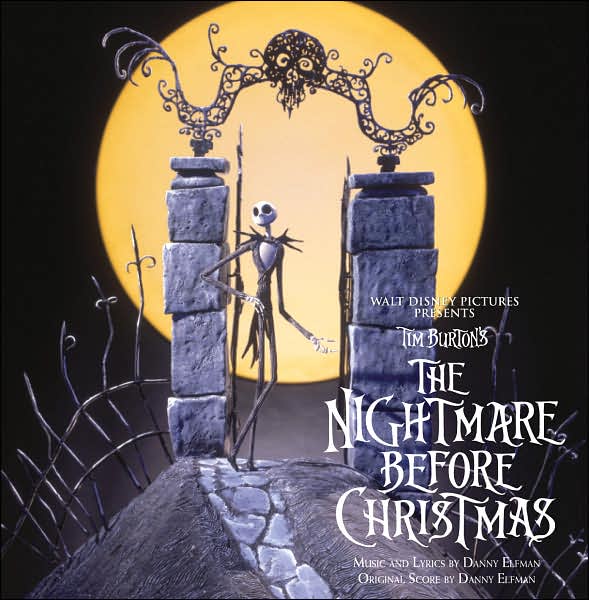
This weekend, I picked up the new The Nightmare Before Christmas: Special Edition soundtrack. In a vain effort to actually provide content for this blog, I will attempt to put into words how I feel about it.

The first disc is, as far as I can tell, exactly the same as the original album. It's possible that there was some remixing and remastering, as the disc sounds a little more crisp than it originally did. Composer Danny Elfman was in the prime of his career when he scored Nightmare. He was fresh off of his two Batman scores, Edward Scissorhands, and Sommersby (a personal favorite of mine), and he was about to score what many consider to be his best work--Black Beauty. What we have here is Elfman doing what he did best--gothic, goofy scoring to a Tim Burton film. He's revisited this style occasionally--Sleepy Hollow and Men in Black, primarily--but this is truly the end cap to Phase One of his career. And a fitting one at that.

If you don't know the songs, your head has probably been buried in the sand for the last thirteen years. "This Is Halloween" is pure revelry, and it's one of the best songs representing a holiday that is generally given the short shrift musically. Hot Topic punks everywhere (many of whom were still crawling on all fours when the film was originally released) cut themselves to the beautifully sad "Sally's Song." Nightmare is, perhaps, the best musical of the last twenty years.

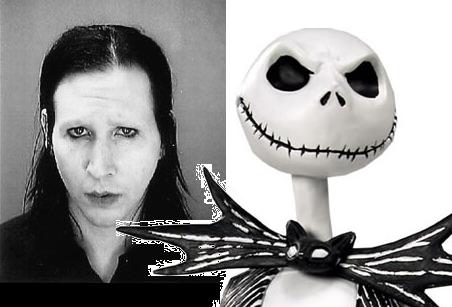
The second disc is a whole other animal. The album producers hired a full arsenal of popular musicians to record their own versions of Elfman's classic songs. The results are truly mixed. Marilyn Manson takes "This Is Halloween" to a new level by infusing it with his own bleak style. He doesn't add anything particularly noteworthy to the song, but there are points in the song in which the drums are rousing. Fiona Apple grunts "Sally's Song," and I had high hopes for this cover version. It's not bad, but the song is definitely suited better by a voice in a higher range, like original artist (and Home Alone mother) Catherine O'Hara. I've never heard of She Wants Revenge, but you can't say that they didn't make "Kidnap the Sandy Claws" their own. They turned the tune into a rave dance, complete with techno beat. It's intriguing, and I like the singer's voice (which has David-Bowie-esque qualities). However, at over five minutes, it outwears its welcome by a verse or two. The rest of the album is full of uninspired pop-punk covers by the likes of Fall Out Boy and Panic! At the Disco. They're pretty bland and forgettable.

Unfortunately, all of these tracks suffer one fatal flaw--they can be compared to their amazing originals. All of the covers--but especially the punk ones--suffer from holding too closely to the original material. With the exception of She Wants Revenge, nobody really leaves their imprint on the song. The disc is hardly a cover album. It's more like a "Listen to the song again but this time with an electric guitar" album.

The rest of the second disc is full of Danny Elfman's original song demos. With the exception of "This Is Halloween" (which appeared on his Music For A Darkened Theater, Vol. 2), none of these tracks have been available in legal, non-bootleg form. Danny Elfman himself does all of the voices. There is a significant, operatic portion of "Making Christmas" that doesn't make its way into the film. It's nice to have them for archival purposes, but there's hardly anything of note. You'd be better served with the film versions of the tracks.

If you want a better "cover" album of songs from musicals, I have two suggestions. The first is Wig in A Box, which is full of Hedwig and the Angry Inch covers, turns most of the songs on their heads. Featuring Ben Folds, Rufus Wainwright, Cyndi Lauper, and Stephen Colbert, it's not always successful but at least it takes chances. The other recommended album is the original soundtrack to the South Park movie. It includes the original songs and then songs "inspired by" the soundtrack. DVDA, Violent Femmes, and RuPaul (among others). They use songs like "Uncle Fucka" and "I Can Change" as building blocks and write their own music around them.

If you're a die-hard fan of any of the cover bands, I guess I could recommend picking up the album. Otherwise, I'd stick with the single-disc original. It's cheaper now.

Click here to go to the official MySpace and hear four of the five covers.

Disc 1

1 Overture
2 Opening
3 This Is Halloween
4 Jack's Lament
5 Dr. Finklestein/In The Forest
6 What's This?
7 Town Meeting Song
8 Jack and Sally Montage
9 Jack's Obsession
10 Kidnap the Sandy Claws
11 Making Christmas
12 Nabbed
13 Oogie Boogie's Song
14 Sally's Song
15 Christmas Eve Montage
16 Poor Jack
17 To the Rescue
18 Finale/Reprise
19 Closing
20 End Title

Disc 2

1 This Is Halloween (Marilyn Manson)
2 Sally's Song (Fiona Apple)
3 What's This? (Fall Out Boy)
4 Kidnap the Sandy Claws (She Wants Revenge)
5 This Is Halloween (Panic! At the Disco)
6 Making Christmas (Demo)
7 Oogie Boogie's Song (Demo)
8 Kidnap the Sandy Claws (Demo)
9 This Is Halloween (Demo)
10 Town Meeting Song (BEST BUY EXCLUSIVE Demo)
11 What's This (BEST BUY EXCLUSIVE Demo)

Monday, May 02, 2005

Bon Jovi: These Days

Okay, I finally admit it.

I, Spoodles, am a Bon Jovi fan.

I know, I know. The shame! However, I remain a fan and this article is about them.

So suck on it long, buddy.

Bon Jovi is the most talented band in the history of the world. And I mean that, sincerely. They are the only band I have ever heard that can successfully, consistently feed the listener an emotion throughout each and every one of their songs. If they want you to jump up and down during a song (such as "It's My Life" or "Living on a Prayer") they can make you do it. If they want you to cry like a little girl (see "Always" or "Bed of Roses"), it's going to happen. Sure, other bands can do it occasionally, but Bon Jovi has it down to an art. The funny thing is, they are completely unsubtle about it in every way. Much like most of the bands that attained fame in a similar era (Aerosmith, for instance), the music beats you over the head until you fall in submission. This, however, is not the real reason they are the most talented band ever to grace the green and blue orb we orbit on.

The reason Bon Jovi has more talent than, say, The Beatles or U2, is because they can write the silliest, stupidest, crappiest, worst, most horrific lyrics in the history of the world, and they can still get away with it and be popular. Take, for instance, the aforementioned "Living on a Prayer." If a progressive rock band, such as Franz Ferdinand or The Killers, came onto the scene today with lyrics such as...

"We've gotta hold on to what we got. It doesn't make a difference if we make it or not..." and "Woah, we're halfway there. Woah, we're living on a prayer."

...They would most certainly not sell any reasonable amount of albums. Despite this fact, Bon Jovi has somehow managed to overcome the odds and release the most hideous lyrics known to man. In the midst of this, they somehow became famous and huge and you all know the story.

Now that their talent is undisputed, we can get into the matter at hand.

Bon Jovi: These Days

Another underrated album. While most people would claim that Bon Jovi is an overrated band, give me the benefit of the doubt in this article. Coming off of what many Bon Jovi fans consider a career high (the album Keep the Faith which included "Bed of Roses," "Keep the Faith," and "In These Arms"), Bon Jovi decided to take a complete U-turn with the direction of their music. Where Keep the Faith was an upbeat album about love and, obviously, faith, These Days, the follow-up to Faith, was an album about heartbreak and losing religion. The song "Something to Believe In," for instance, begins with the lyric "I lost all faith in my god, in my religion too." "These Days" deals with a heartbroken suicide attempt ("Don't you know that all my heroes died?"), and "Hearts Breaking Even" deals with self-mutilation ("When I cut you off, did I cut myself with the same damn knife?"). While this is obviously not enviable behavior, I like to hear vocalists show emotion, to actually bleed what they sing (see also my article on the Yeah Yeah Yeahs). This album is full of that kind of stuff.

It's disappointing to me that every time I walk into a used CD store, ten or eleven copies of These Days sit along with one or two copies of assorted "best-of-Bon-Jovi"-type albums. With that said, it's not surprising that these songs didn't get any radio play (seeing as how they are the polar opposite of tripe like "It's My Life" and "Living on a Prayer"). Bon Jovi obviously turned their backs on this style of writing, because the inferior-in-every-way Crush, better known as "that album with "It's My Life" on it," was their next release. 'Tis a shame.

Interesting tidbit: if you've ever seen my "crappy poems and songs" section on my other site, you could probably tell that Bon Jovi was my lyrical influence. Take, for instance, this little marvel. Yep. I've long since stopped writing poetry. Haha.

Thursday, April 28, 2005

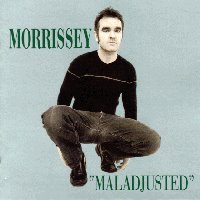
Morrissey: Maladjusted

An entirely underrated album...

Morrissey: Maladjusted.

Morrissey, née Stephen Patrick Morrissey, the lyricist and vocalist for The Smiths, has had a career of ups and downs. His first solo album, Viva Hate, immediately outsold any of the previously released The Smiths albums, including the critical favorites Meat is Murder and The Queen is Dead. The quality of his solo work didn't diminish, and the climax of a long, critically acclaimed run of albums was Vauxhall and I, the 1994 album that many Morrissey fans call their favorite. Vauxhall and I was a bittersweet album, with the lyrics and tone influenced by the recent deaths of three of Morrissey's close friends (but not without the usual, controversial vitriol that Morrissey is best known for--see "Speedway"). After Vauxhall, which a deeeply saddened Morrissey originally claimed to be his final album, the fans and critics expected Morrissey to release another album with the same style of music as Vauxhall--sad and beautiful. Instead, the follow-up was Southpaw Grammar, an album fans have best described as "punk prog.". Disappointed by this sudden jolt away from the melancholy orchestral stylings of Vauxhall, fans and critics alike reacted poorly to Southpaw (which is another highly underrated album, but I'll save that for some other time).

In 1997, Morrissey released an album that is, in my opinion, on par with Vauxhall in terms of composition, power, and lyrics. Maladjusted was another critical and fan failure, but I believe this was not because of the album itself, but solely due to the backlash from Southpaw Grammar the year before. Maladjusted includes its fair share of beautiful Vauxhall-esque songs, including "Alma Matters," "Trouble Loves Me," and "Ammunition." However, this style of songs seem to be an afterthought to the actual driving force of the album, which is revenge (to the critics, fickle fans, and former Smiths bandmates who sued Morrissey and his collaborator Johnny Marr for money that Morrissey and Marr had every legal right to own). The real thrust of Maladjusted is the anger shown in tracks like "Sorrow Will Come in the End" and "Ambitious Outsiders." It's an amazing feat, in my mind, that Morrissey can write an album insulting everybody who listens to his music, and not only make it poignant and listenable, but cohesive as a whole. This is where Maladjusted shines, and it's a shame that more critics (and Morrissey fans themselves) didn't understand the full power of this album.

After a seven year hiatus, Morrissey returned with the critical and fan-approved You Are the Quarry, an album that once again took potshots at critics in songs such as "You Know I Couldn't Last." It's good to see people are becoming more friendly to Morrissey's style of bitter pop music.

I hope some of you are enjoying these articles, or more importantly, that you are listening to the samples and downloading some of the songs (and enjoying them). I don't know how many of these I have left in me (although a few underrated albums are lingering around in my mind), and it may be a few posts until the next one. Discover some of this good stuff, people.

Wednesday, April 27, 2005

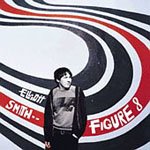
Elliott Smith: Figure 8

Dear Reginald Vel Johnson:

In a conversation with somebody who deserves attention, I have come to understand that my last post was sacreligious and offensive. I would like to reneg on all of my prior and previous prayers for money. I would also like to return all of my "Jesus is My Homeboy" merchandise in a show of unity with our religious cousins in the north.

Because of my attitudes in the last post, I would like to atone for all of my sins and misdeeds. Mr. Vel Johnson, you are the best. Every time you play a cop on the big-screen or on television, I am moved by your realistically surly portrayal. Who would have thought that Carl Winslow could be such a threatening cop in the Die Hard movies? Not I, that's who!

On to business. Reginald, I have some important information to share with you. It is about one of the most underrated albums of all time (click on in-text links for samples of the tracks).

Elliott Smith: Figure 8.

Up until 1999, Elliott Smith had not released a poorly received album. Roman Candle, Elliott's first album, was an instant hit. The most amazing thing, and a testament to Elliott's songwriting genius, is that Elliott recorded the entire album under the stairs in an old house, and the songs were simply the most recent eight songs he had written. The self-titled album, Elliott Smith,, followed suit, with very little production value. Critics loved Elliott's stuff and couldn't get enough. Either/or was more of the same, and XO took Elliott in a new, highly-produced direction. Elliott made yearly critics' top-ten lists and increased his sales with each album.

Then, Figure 8 came along. Even though Elliott played almost every single instrument on every track of the album, this was to be Elliott's most elaborately orchestrated and higly produced album to date. Critics hated it. They felt that Elliott did his best work in "Lo-Fi" settings. They didn't understand what Elliott was going for with the epic sound of tracks like "Can't Make a Sound" and "Wouldn't Mama Be Proud?", and they flocked to the more typically Elliott-style tracks like "Somebody That I Used to Know" and "Everything Reminds Me of Her." Figure 8, ending in a track titled "Bye," was to be the final album Elliott released before he passed away (the album he had completed in the final weeks of his life was released on the anniversary of his death). It's a shame that more people were turned off of this album by sour critical reviews, as well as their own preconceptions and biases.

I guess I'm writing to you about this, Mr. Vel Johnson, because I was hoping that you'd be able to help spread the word about this awesome album. In fact, tomorrow may very well bring another one of the most underrated albums of all-time.

With love,

Spoodles, Editor in Chief

P.S. Reginald, please give me a million dollars.

Wednesday, August 11, 2004

REVIEW: Spider-man 2 (Danny Elfman)

Spider-man 2, as a film and as a score, has managed to top it's amazing original. However, while scoring Spider-man 2, Danny Elfman seems to have gotten shafted. It is quite clear that director Sam Raimi wanted Danny to adhere closely to the temp track, as evidenced by many similarities between tracks and many omissions and edits to Danny's score for the film.

Because of this, Danny Elfman didn't make any grand, sweeping changes while scoring Spider-man 2. Instead, he seemed to take what worked best from the first score and tweak it, making the recently released score album especially pleasant. I believe that, due to the improvements, Spider-man 2 is a vast improvement on its predecessor. The heroic bits, especially in "M.J.'s New Life/Spidus Interruptus," "Train/Appreciation," and the end of "At Long Last, Love" soar to new heights, and the tender moments in tracks such as "Aunt May Packs" and "Armageddon/A Really Big Web" are infinitely more touching than the former score. In addition to these sequences, there are brand new motifs (I hesitate to say themes) for the series' newest villain, Doctor Octopus. I don't believe Doc Ock's music fits him quite as well as the Green Goblin's theme (which makes a wonderful, very disturbing appearance here) fit its villain. In fact, the Doc Ock motifs actually remind me a bit of the Penguin's theme from Batman Returns, but it's not terrible and is not distracting in the grand scheme of things. Overall, this album is probably the best listening experience we've had from Danny Elfman since 1999's Sleepy Hollow.

Unfortunately, the score does not translate well in the film, due in part to the filmmakers' tracking of music not written for the various scenes. I haven't seen this level of musical hacking and cutting outside of George Lucas's Star Wars prequels. In the film, instead of using Danny's excellent new material (or, as it may be, his slightly tweaked recordings), the film is littered with cues reused from the first Spider-man score, and entire cues were dropped. Two of the best cues on the album are "Aunt May Packs," a delicate and moving bit of score that was dropped completely from the film, and "Train/Appreciation," which was replaced in the final cut. "Aunt May Packs" begins with the slow strum of an acoustic guitar, with slowly building strings behind it. "Train/Appreciation" involves an improved version of the "Revenge" track from the original Spider-man score followed by what may be Danny's best action writing since 1989's Batman. The track concludes with choirs mourning the supposed "death" of our hero along with the people he just saved (and the viewers of the film). This hauntingly beautiful music would have suited the film better than what eventually ended up in the film.

The inclusion of "Raindrops Keep Falling on My Head" is a baffling choice on this album. It definitely doesn't fit the mood on the album, and was used as a gag in the film. Thankfully, it was not placed chronologically. It is easily omitted at the end of the album.

With the treatment of his excellent score in the film, I would understand if Danny were uninterested in scoring the third Spider-man film. It's a massive insult to a composer to hack up their carefully composed work and place it where it doesn't belong. The score is wonderful, but in the film it is nothing short of distracting.

Score rating: **
CD rating: ****